The 250 Generation Challenge: Why Long-Term Fermentation Fails
When evolution works against you: A technical deep dive into genetic drift.

Amir M. Cheraghali
Co-Founder & Lead Scientist
The Evolution of Failure
Continuous biomanufacturing is the holy grail of the industry. Imagine running a bioreactor for 30 days straight instead of 3. The economics are transformative. But biology hates vacuum, and it hates inefficiency. Carrying a plasmid that forces the cell to produce 30% of its dry weight in foreign protein is a massive evolutionary disadvantage.
The Mutation Math
With a mutation rate of roughly $10^{-9}$ per base pair per generation, and a culture density of $10^{11}$ cells/mL, every possible single-point mutation occurs thousands of times per hour in a 10,000L tank. Mutations that break the metabolic burden (i.e., stop production) confer a ~20% growth advantage.
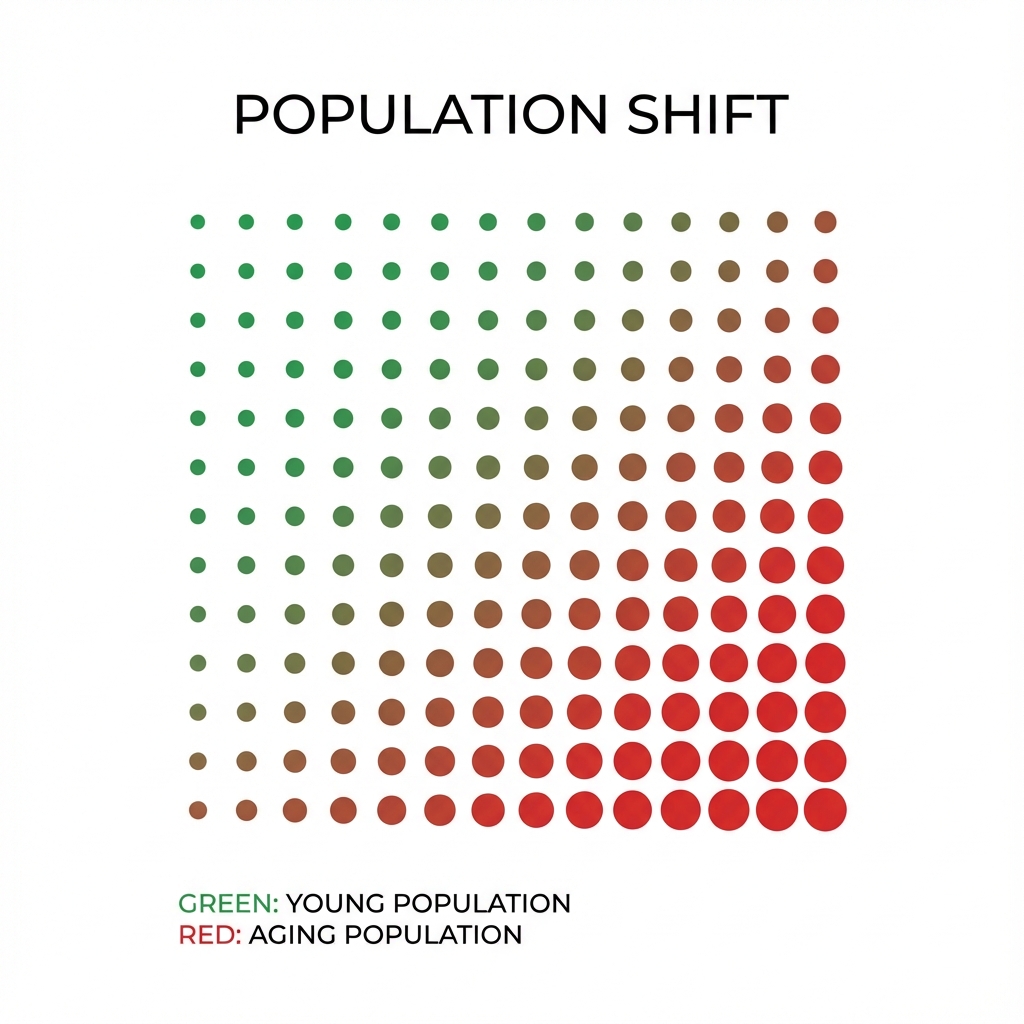
The "Cheater" Sweeps
Once a cheater mutant appears, it sweeps through the population mathematically.
By generation 60, what started as a single cell has grown to dominate 50% of the biomass.
By generation 80, your reactor is essentially a soup of useless biomass consuming expensive glucose.
Traditional antibiotic selection works for generation 0-20, but the secreted beta-lactamase destroys the antibiotic in the media, leaving the later generations completely unprotected.
The Catcheater Solution: Negative Selection
We don't rely on antibiotics. We assume the cheater will arise. Our "Snitch" circuit actively monitors metabolic stress. A productive cell is a stressed cell. If a cell stops being stressed (because it mutated the plasmid), the "Enforcer" module kills it. We effectively turn the evolutionary advantage on its head: Only the burdened survive.